Our Mission
The Faculty of Medicine at Juntendo University provides education to students striving to become physicians, enabling them to graduate in six years and successfully pass the National Examination for Medical Practitioners. However, our mission extends
far beyond preparing students for examinations. We are committed to nurturing physicians endowed with knowledge, intellect, sensitivity, and a well-rounded education, capable of contributing meaningfully to society.
At Juntendo University, medical education and extracurricular activities alike foster close relationships between students and faculty members. We value the individuality of each student, ensuring that they can experience a fulfilling student life within an educational
environment that is both supportive and enriching. To maintain and further develop this environment, the Faculty of Medicine declares the following mission to all students, faculty, and staff.
Classes as a place for human growth
Education is not limited to the transfer of knowledge and skills, but is also a place for cultivating humanity through direct communication between faculty and students. This principle applies equally to bedside teaching, clinical practicums, and hands-on training.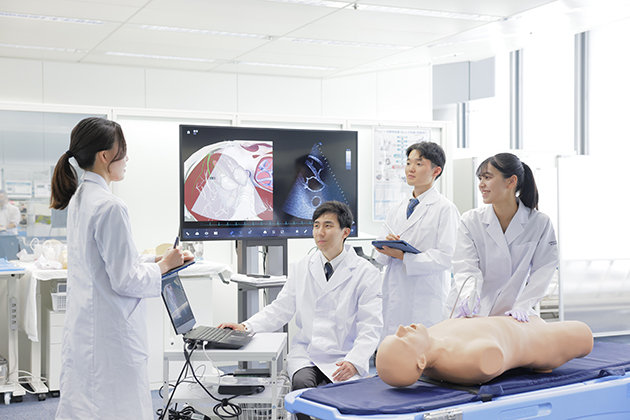
Responsibilities of faculty and students
Faculty members bear the responsibility of educating, while students have the responsibility of learning. In particular, medical students must recognize that neglecting their studies ultimately causes inconvenience and harm to patients who depend on them.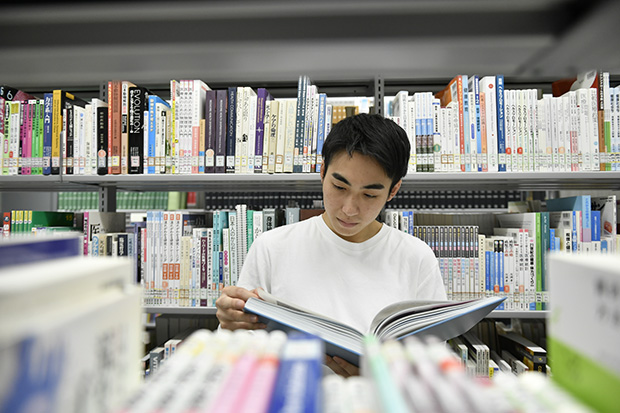
Education as a foundation for research and practice
Educating students is one of the most important ways for faculty members to advance their own research and clinical skills. In teaching others, faculty members also educate themselves. By enhancing student motivation and establishing effective educational systems, the standards of education, research, and clinical practice throughout the university are elevated.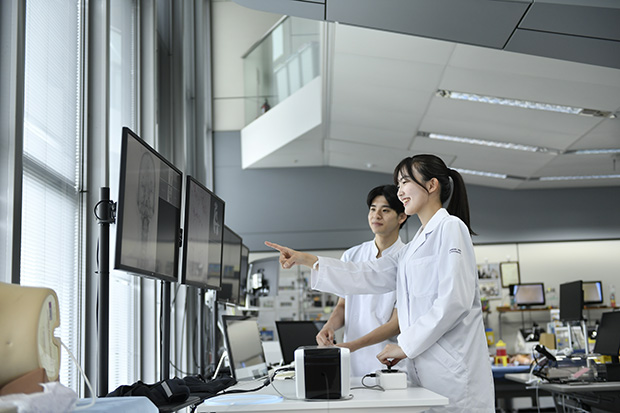
Transforming students into active learners
The true measure of a faculty member’s ability lies in whether they can foster in students the willingness to take initiative and learn independently. Across all courses, faculty must strive to pass on their knowledge in ways that are easy to understand.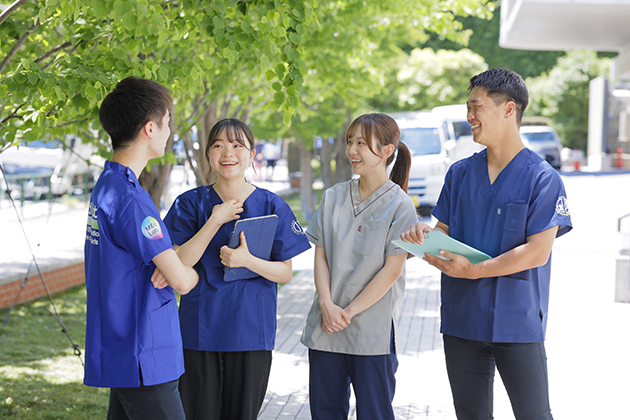
In liberal arts education, basic medical sciences, and clinical education alike, it is essential for professors, associate professors, lecturers, and assistant professors to engage directly in teaching. Moreover, the entire university community must share
the awareness that education is a collective responsibility.
Curriculum
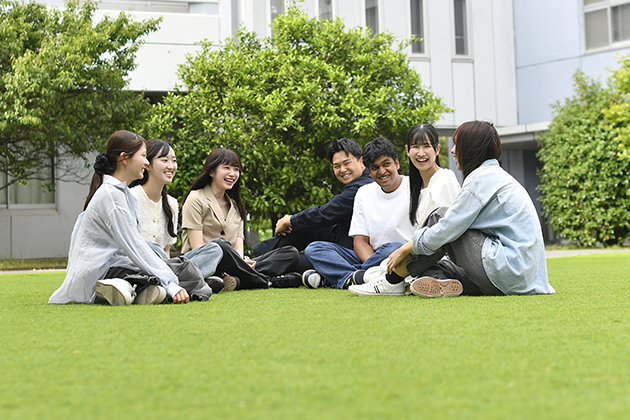
From the first year, the Faculty of Medicine places great importance on a well-rounded general education. In particular, practical English education such as TOEFL and IELTS preparation, as well as medical education within the context of society, are emphasized
and continued from the second year onward.
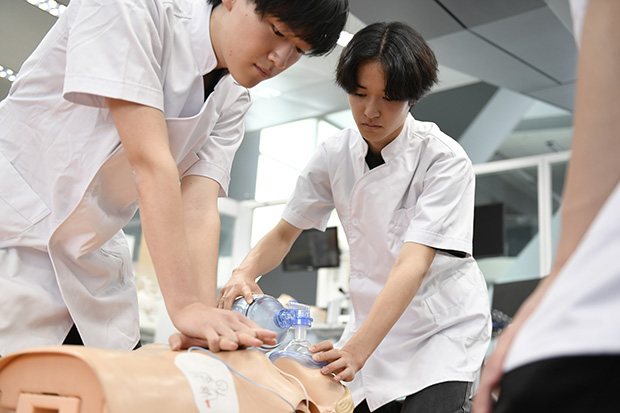
Students gain hands-on experience through hospital training, nursing practicums, facility training, and diagnostic skills training, integrating both basic and clinical medicine. From the latter half of the fourth
year, students begin full-scale clinical training, with further opportunities for overseas clinical training (two to eight weeks, with training locations selectable).
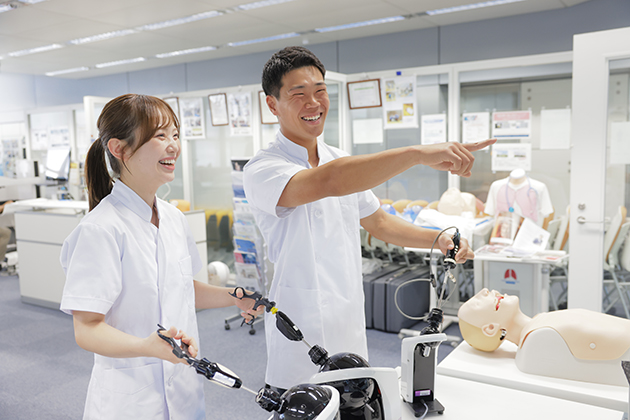
Through these diverse and practical experiences, students are equipped with the knowledge
and skills required to become physicians with both a strong foundation in medicine and an international perspective.

National Medical Practitioners Qualifying Examination
- Japanese medical students must pass the National Medical Practitioners Qualifying Examination (NMPQE) to practice medicine in Japan.
- Juntendo University medical students take NMPQE during their final year (6th year) of medical school.
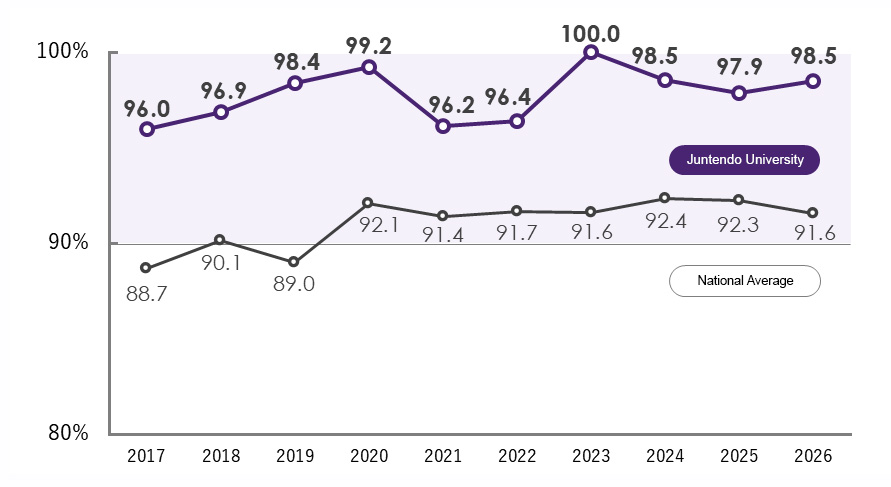
- Juntendo University medical students rank 2nd in the last 10 years and 20 years among all 80 public and private medical schools in Japan in terms of NMPQE success rate.
Study Abroad
- In the sixth year of Juntendo University’s optional student internship program, students have the opportunity to pursue training in fields of their choice, both on campus, at affiliated institutions, and at overseas facilities. Final-year students may study abroad for a period of two to eight weeks in an academic field of particular interest.
- Through these overseas training opportunities, students cultivate an international perspective, nurture their intellectual curiosity, and gain invaluable first-hand experience of medicine in a global context.
- In this way, Juntendo University seeks to foster physicians who meet global standards by promoting international exchange through overseas training programs.
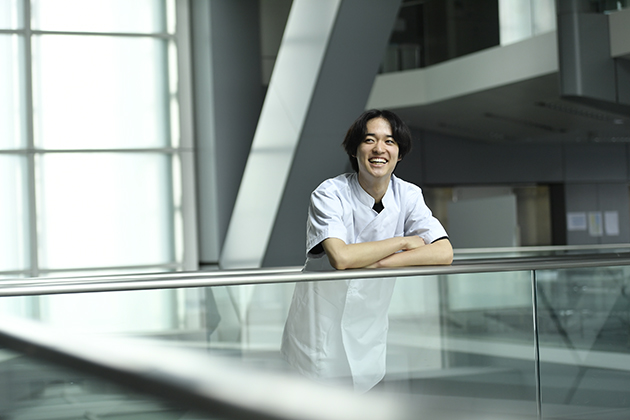
USMLE / STEP 1 COURSE
USMLE / STEP 1 COURSE
- The course is designed to help prepare Juntendo University medical students, graduate students, and residents for a residency in the United States.
- The program will ensure students meet the necessary benchmarks to accomplish the goal of the course.
- Juntendo University faculty members who passed the ECFMG will supervise students through specialized training once a month.
Voices
First Year Student
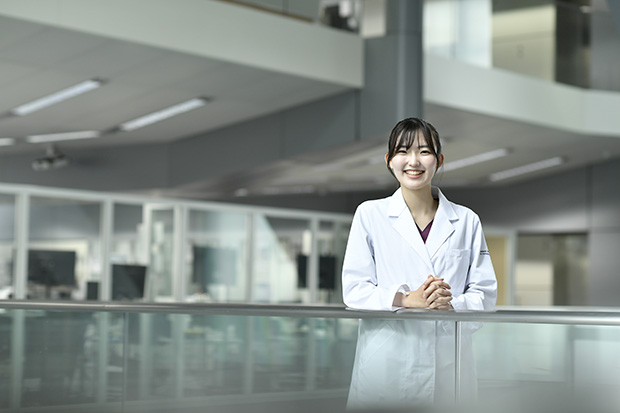
What are you studying in your first year?I am learning the foundational skills needed to study medicine, such as how to use laboratory equipment and microscopes and how to write reports. There are also many opportunities to use English, so my English skills improve naturally. With plenty of discussions and group work, I can feel my communication skills developing. Interprofessional practical training, available from the first year, has also helped me acquire hands-on skills.
What are you working hard at outside your studies?
I devote much of my time to club activities. I am currently a member of five clubs: Golf, Japanese Archery, Women’s Futsal, Light Music, and Sign Language. I always try to maintain a good balance with my studies, adjusting the activity days so that I can participate actively in every club. With the exception of golf, I began all of these activities as a complete beginner, but the kind support of the senior members gives me the confidence to try new things.
First Year Student
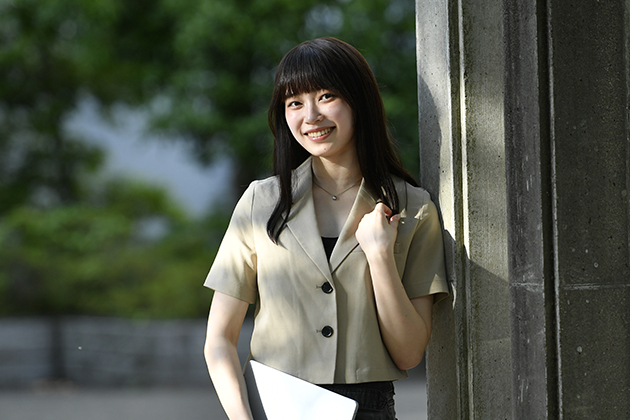
Why did you choose Juntendo University?I immediately felt that Juntendo University was the ideal place to pursue my dream of becoming a sports doctor who works internationally. I was drawn to its outstanding environment for studying sports medicine, including the Faculty of Health and Sports Science and its sports medicine laboratories. The university also offers many opportunities for international exchange, as well as extensive overseas training and study-abroad programs, which convinced me that I could broaden my horizons while studying here.
What do you find appealing about dormitory life on Sakura Campus?
One of its greatest attractions is the opportunity to interact with students from different faculties. I live in the same dormitory as students from the Faculty of Health and Sports Science, and I sometimes train with them at the gym or go running with my roommate. Through dormitory life, I am exposed to athletes whose values and approaches to hard work differ from my own. This is extremely inspiring and also contributes to my personal growth.
Third Year Student
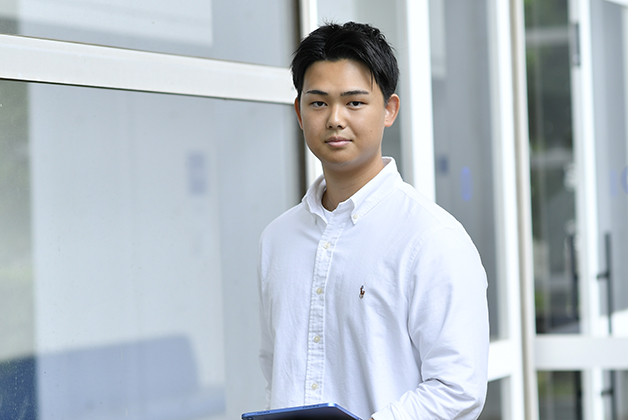
What are you studying in your third year?Through courses in clinical medicine and basic seminars, I am deepening my understanding of medicine from both clinical and research perspectives. As someone who aspires to become a physician who can work internationally, I particularly value the medical English curriculum, which advances step by step each year. What I learn in these classes is useful in many settings, including reading and discussing English-language research papers, preparing for the USMLE, and interacting with international students.
How do you spend your time after class?
I participate in club activities and help support international students. I am especially committed to my activities at the Simulation Center. In an environment equipped with technology for developing practical medical skills, I train in VR-based and robotic surgery. Learning techniques directly from physicians and senior students and practicing alongside my classmates as we motivate one another is constantly stimulating.
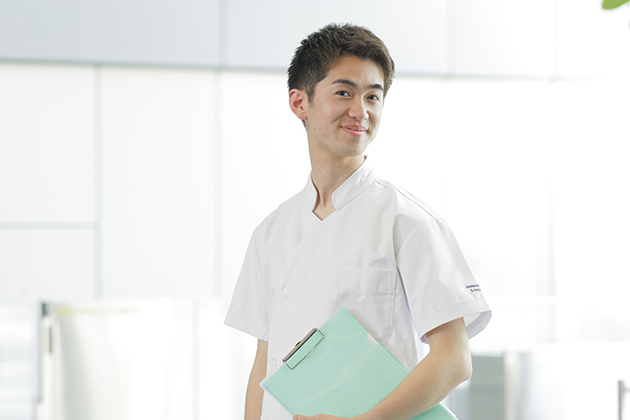
Fifth Year Student
What are you studying in your fifth year?In clinical settings, I am revisiting what I learned through my fourth year and learning how to apply it in practice. Our instructors teach us directly not only how to deepen our understanding of diseases, but also how to communicate with patients, consider the care best suited to each individual, and perform procedures safely and correctly. Chatting with the members of my clinical training group between sessions or after training provides a welcome break.
Please share a message for prospective students.
Preparing for university entrance examinations is a long journey, and there may be times when you cannot yet see the results of your studies. Even so, every effort you make is steadily building your abilities. When you feel tired, it is important to recognize how hard you have worked and give yourself permission to rest. Beyond the entrance examinations, enjoyable days of learning await you. Let that vision of university life motivate you, and keep going until the end without giving up.

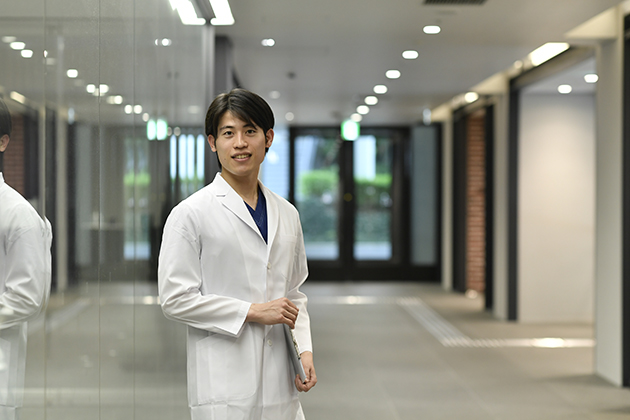
Dr. Abe, Graduate, Resident Physician, Juntendo University Hospital
Proactive mindset cultivated as student guides clinical practice and researchI am currently working as a junior resident physician, rotating through various clinical departments each month while also serving on emergency duty shifts. At the same time, I am pursuing research activities in graduate school. What has been most useful from my university days is the proactive attitude toward learning. I always approach each case with questions about the patient’s condition, make the effort to research on my own, and think things through thoroughly. Moving forward, I aim to balance both clinical practice and research, striving to become a physician capable of helping patients with diseases that are difficult to treat using modern medicine.
Dr. Iwamoto, Graduate, Resident Physician, Juntendo University Hospital
Student experience builds foundation for pediatric careAs a resident, I participate in ward rounds, conferences, and emergency outpatient duties. In these situations, I find that the communication skills I developed during my first year of dormitory life at university are invaluable. Thanks to the practical training I received as a student, I can now carry out my responsibilities smoothly in the clinical setting. In the future, I hope to specialize in pediatrics and support children who are fighting illnesses. I look forward to contributing to medical care together with my colleagues and continuing to grow as a physician.
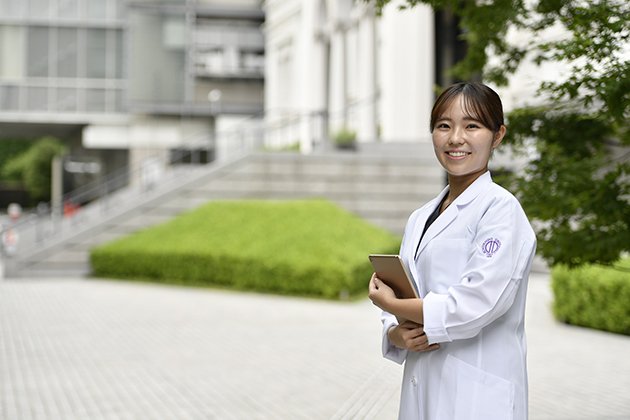
First-Year Student (at the time of the interview)
Q: What do you study in your first year?
Through the basic medical sciences, I acquire foundational knowledge in medicine. There are many opportunities for active learning, such as hands-on experiments and group discussions. In addition, students can take introductory medical classes—including hospital practice and clinical fieldwork—from the first year. I also appreciate being able to choose electives such as Chinese or psychology based on my own interests.Q: How is dormitory life on the Sakura Campus? What do you find appealing about it?
At first, I was a little worried about living in the dormitory, but thanks to my roommates with whom I share meals, shopping trips, and study sessions, I now enjoy every day. We celebrate birthdays and hold seasonal events together in the dorm. Beyond just sharing a room, we go out for sports and other activities, creating many fun experiences together. Life in the dorm is fulfilling, with countless opportunities to grow and bond.
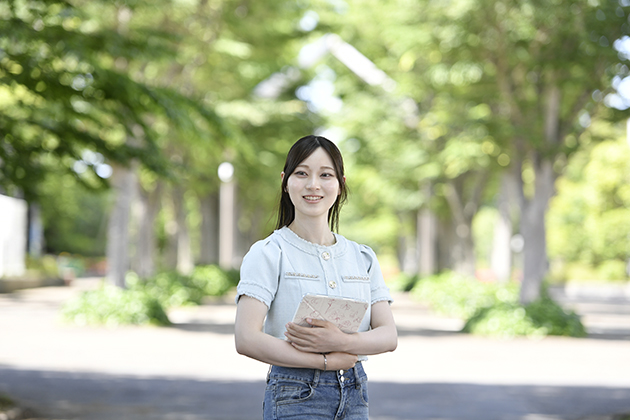
Third Year Student (at the time of the interview)
Q: What do you study in your third year?Building on the basic sciences, I now study pathology and pharmacology, subjects that are closer to clinical medicine. With more opportunities for experiments and practical, hands-on classes, I find myself increasingly engaged in learning. By analyzing images and observations, I am able to deepen my understanding from different perspectives. I feel that the curriculum is well-structured, with each course bringing me one step closer to my dream of becoming a physician.
Q: Can you tell us about the club you belong to?
I belong to the Light Music and Mountaineering Clubs. The Light Music Club holds live performances about once every one or two months, giving us goals to work toward and making practice sessions enjoyable. Through the Mountaineering Club, I have had valuable experiences such as climbing Mt. Fuji and receiving direct guidance from professional mountain rescue doctors affiliated with the Japan Alpine Club.
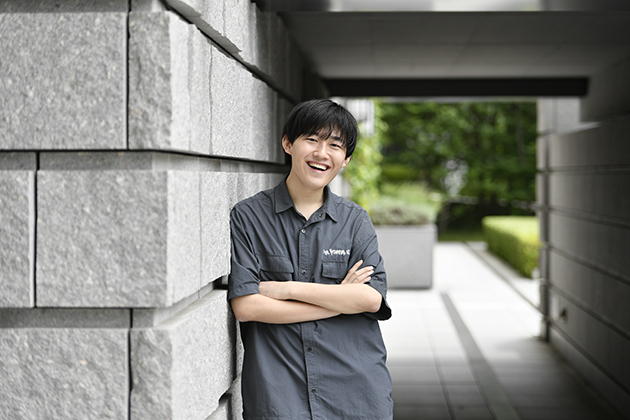
Fifth Year Student (at the time of the interview)
Q: What do you focus on during clinical training?I work to put into practice what I have learned in lectures up to my fourth year, applying that knowledge in real clinical settings. Through examinations and conversations with patients, I strive to understand the issues they face. I also participate in study groups known as “Kurusuzu,” which allow me to acquire more specialized knowledge. Even on busy days filled with training, I make an effort to use my time effectively and refresh myself by going out with friends to nearby places.
Q: Do you have a message for prospective students?
I know well the challenges and effort required to prepare for the entrance examination. But medical school and campus life at Juntendo University are truly rewarding. It is natural to feel anxious and impatient before the exam, yet the experience of persevering until the end through your own efforts will surely become a source of great confidence later. At times, remember to reward yourself for your hard work, and keep pushing forward through this demanding period.